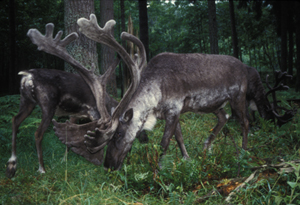
 Should a critical habitat designation include the species’ known habitat when it was more abundant, or just the area it was known to use when it was listed as an endangered species?
That’s the question the US Fish and Wildlife Service (USFWS) is facing as it decides on a critical habitat designation for South Selkirk woodland caribou herd, says an article in the Spokane Spokesman-Review. The USFWS would like to protect 600 square miles of potential caribou habitat in north Idaho and eastern Washington, but Idaho’s two senators say, no, just the area where the caribou were last seen in the US should be protected.
The USFWS critical habitat designation for the caribou has been controversial, says the Spokesman-Review article. The agency received more than 300 comments on it.
Read more in the Spokane Spokesman-Review, here.
Photo: A woodland caribou, but not from the South Selkirk herd. rangifer caribou, by Erwin & Peggy Bauer, 7/93. 11444, 102.3.16
 At first they were, like gray squirrels almost everywhere in the US, abundant to the point of being a nuisance, especially to people with bird feeders. Then they were gone, or almost so. When mange struck the gray squirrels of the San Bernardino Mountains in California, people noticed, particularly in the past year.
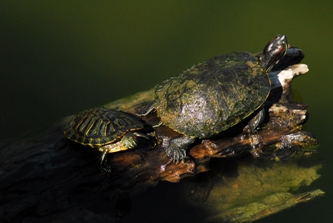 The Phoenix Zoo has been trying to get rid of the non-native turtles in the pond in the park near its entrance since 1999. The number of turtle species not native to Arizona found in the pond had declined over the last 13 years, but this year there was an increase. 142 non-native turtles were trapped, including 139 pond sliders, one spiny softshell, one painted turtle, and one eastern redbelly turtle.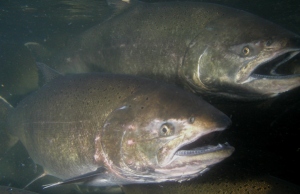
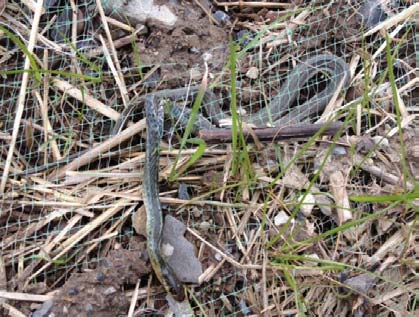 Whether its road construction, utility work, or chemical remediation, many states call for the use of some sort of landscape fabric or biodegradeable netting to prevent erosion at construction sites until plants take root.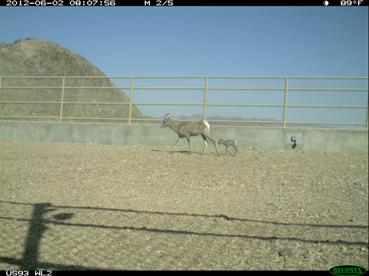
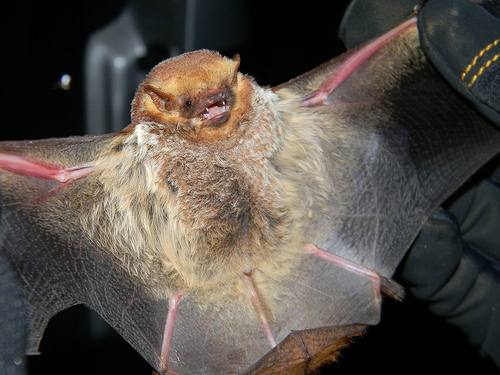
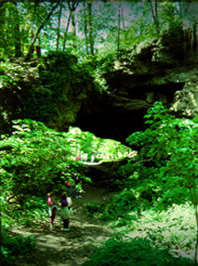 On Wednesday, the Iowa Department of Natural Resources announced that a low level of the fungus that causes white nose syndrome was found on one of the 15 bats swabbed this winter at a tourist cave run by the state. None of the bats seen in the cave appeared to have symptoms of white nose syndrome.
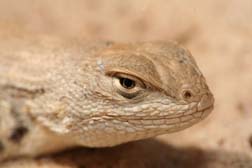 The US Fish and Wildlife Service announced yesterday that the dunes sagebrush lizard (Sceloporus arenicolus) would not be listed under the Endangered Species Act because voluntary conservation methods undertaken by private landowners in Texas and New Mexico have worked so well.