
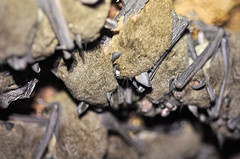
 The US Fish and Wildlife Service (USFWS) announced yesterday that, for the first time, white nose syndrome has been documented in the endangered gray bat.
The USFWS press release says:
“The documented spread of WNS on gray bats is devastating news. This species was well on the road to recovery, and confirmation of the disease is great cause for concern. Because gray bats hibernate together in colonies that number in the hundreds of thousands, WNS could expand exponentially across the range of the species,” said Paul McKenzie, Missouri Endangered Species Coordinator for the Service. “The confirmation of WNS in gray bats is also alarming because guano from the species is an important source of energy for many cave ecosystems and there are numerous cave-adapted species that could be adversely impacted by their loss.”
Also according to the release, the afflicted bats were found in Hawkins and Montgomery counties in Tennessee during two separate winter surveillance trips, conducted by the Tennessee Wildlife Resources Agency (TWRA) and The Nature Conservancy (TNC).
Read the USFWS press release here.
Photo: Photos of gray bats with white-nose syndrome from Hawkings and Montgomery counties, Tennessee, courtesy USFWS
 A
A 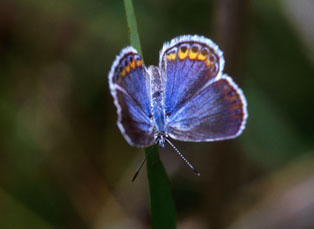 Maine and Minnesota both have citizen science butterfly projects.
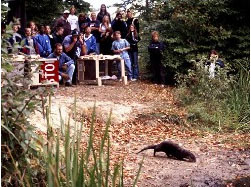 From 1995 to 2001, New York State relocated river otters to the central and western parts of the state, where the species was believed to be extirpated. The recent retrieval of a car-killed river otter was not entirely bad news for the program. A microchip implanted at the time of release indicated it had been released in 2000, making it 12 years old. That’s four years older than the average wild river otter.
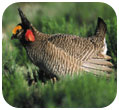 When two environmental groups reached an agreement with the US Fish and Wildlife Service last year, pending court cases on the endangered species status of hundreds of species were settled as well.