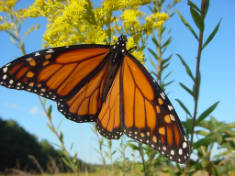
 The number of monarch butterflies wintering in Mexico has plummeted in the last two years. Many factors are involved, but widespread use of glyphosate (an herbicide) is one cause that’s under human control.
The development of genetically modified plants that resist glyphosate is often sited as one of the causes of monarch butterfly decline. Because agricultural fields can now be liberally covered with the chemical, the little patches of milkweed that once thrived on on the edges of farm fields throughout the Midwest are now gone, taking the monarch caterpillar’s food source with them.
The Los Angeles Times reports that the Natural Resources Defense Council has filed a petition with the US Environmental Protection Agency asking that glyphosate not be spread on highway margins and utility rights of way to allow milkweed to grow there, as long as human safety isn’t compromised. It also asked that farmers establish glyphosate-free zones in their fields.
Read the entire article in The Los Angeles Times, here.
Photo: Monarch butterfly, Mark Musselman, USFWS

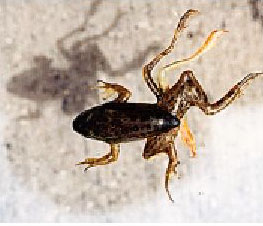 On an August day 17 years ago, eight Minnesota junior high school students on a field trip caught 22 frogs in a farm pond. At least half of the frogs had some abnormality, mostly in their hind legs. The conscientious teacher reported the group’s finding to the state. Dutiful state scientists surveyed wetlands across Minnesota and found at least one hotspot of frog abnormality in every county in the state.