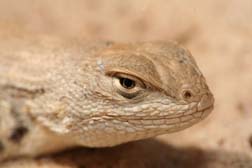
 The US Fish and Wildlife Service announced yesterday that the dunes sagebrush lizard (Sceloporus arenicolus) would not be listed under the Endangered Species Act because voluntary conservation methods undertaken by private landowners in Texas and New Mexico have worked so well.
The most interesting thing about the dunes sagebrush lizard is that its habitat happens to be among the richest oil-producing regions in the lower-48 states. A listing would curtail drilling for oil and gas in the region, so it’s no surprise that the oil industry has fought against a federal listing for the lizard for decades.
Is the decision a victory for the oil industry? For conservation agreements? For the lizard?
That certainly depends on your point of view. You can see two different points of view on display in these articles. The Reuters report buries the information that environmental groups are unhappy with the ruling, and gives only a tepid quote from one of the organizations that disagrees. Read the Reuters piece here.
The Fort Worth Star-Telegram puts environmentalists’ displeasure at the top of the story and includes a more forceful quote from the same source. Read the Star-Telegram report here.
A KXAN TV story provides some helpful details.
Photo courtesy of US Fish and Wildlife
 The
The  When two environmental groups reached an agreement with the US Fish and Wildlife Service last year, pending court cases on the endangered species status of hundreds of species were settled as well.
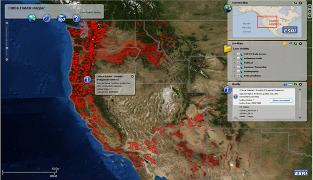 Is a picture worth a thousand words? The US Fish and Wildlife Service and the National Oceanic and Atmospheric Administration (NOAA) think a map is worth several pages of text. Both governmental entities are planning on replacing the long written descriptions of critical habitat for Endangered Species Act (ESA) listings in the Federal Register with a map. Make that an on-line map.