 Depending on where you live, you may have noticed it in autumn. There were very few monarch butterflies around. It wasn’t unexpected. Numbers were low last winter in Mexico, and the weather over the summer didn’t favor the hatching of new monarchs.
World Wildlife Fund, Mexico’s Environment Department and the Natural Protected Areas Commission just announced that the numbers of monarch butterflies overwintering among the Transvolcanic mountains of central Mexico are the lowest since they started keeping records back in 1993. They measure the butterflies in the number of hectares that they cover in the park. This winter they covered 0.67 hectares. At their recorded high, in the winter of ’95-’96 they covered over 20 hectares.
Why, oh, why, do you ask? At one time the forest where the monarchs roost over the winter was being cut down, but that problem seems to have been solved. Climate change is in the mix. But the big problem, according to MonarchWatch, at the University of Kansas, is that herbicide tolerant (HT) crops have removed milkweed from a part of the country vital to the monarchs’ migration: the Midwest.
Read the report from MonarchWatch, here. It includes all the details on the HT crops theory.
Read the Associated Press news story in SF Gate, here.
Photo: by Mark Musselman, courtesy US Fish and Wildlife Service
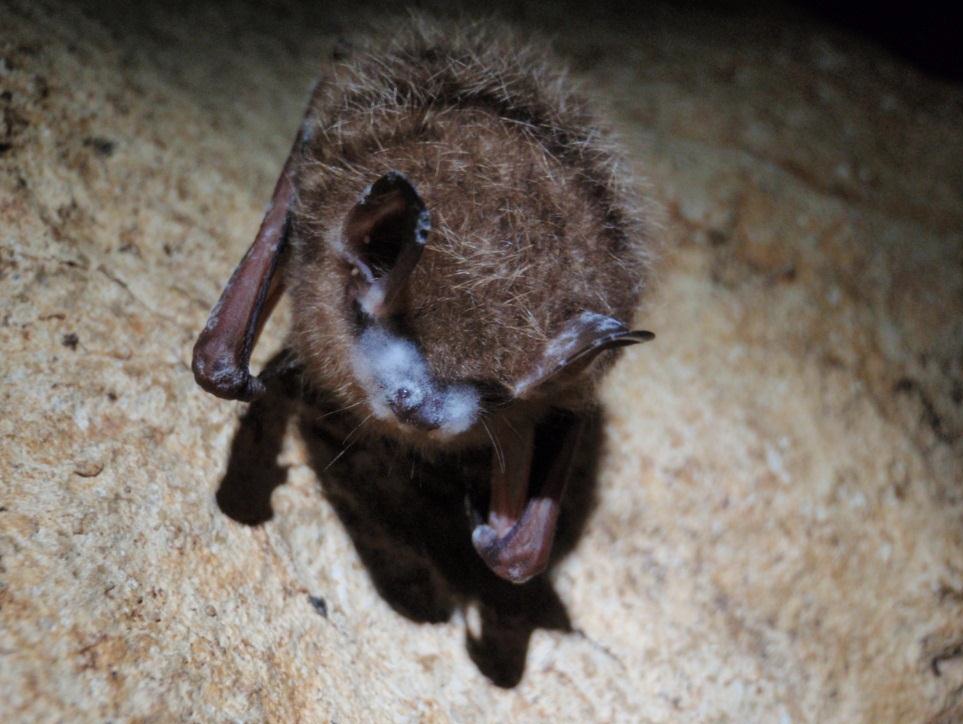 Bats move around a lot. Some bats migrate. Some bats move from summer or maternity roosts to winter hibernation caves. Finding out how bats move has suddenly become extremely important. White nose syndrome seems to be following the known patterns of bat movement. But just so little is known.
 Geolocators are a relatively new tool that allows researchers to track the movements of small animals, such as birds.
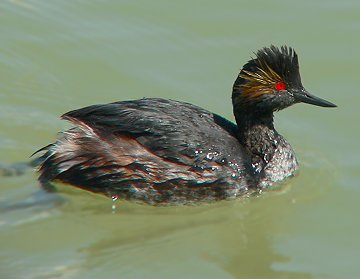 Some 5,000 eared grebes mistook pavement for water at the Dugway Proving Ground in Utah,