Public Continues to Misunderstand Sudden Bird Deaths

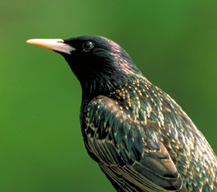
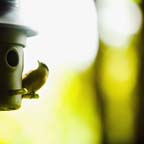
A starling, like the birds killed on I-95 in Maryland in FebruaryHundreds of starlings fell to the asphalt yesterday afternoon during rush hour on Interstate 95 near Laurel, Maryland, in the Washington, DC area. Traffic backed up as motorists tried to avoid running over the birds.

The Washington Post and ABC7 quote Maryland Department of Natural Resources biologist Peter Bedel as saying the birds likely just flew into a truck.

Lots of pics and videos of dead birds; lots of conjecture about the Aflockolypse of New Year’s Eve 2011.

Read the Washington Post story.
See the ABC7 story.
Here’s a brief in the Baltimore Sun.

Photo: A starling (not dead) by Dr. Thomas G. Barnes, courtesy of US Fish and Wildlife Service.

Winter Research Roundup

In New York State, a recent survey of the spruce grouse population revealed that there are not many of the birds left in that state. A revised management plan seeks to restore the population.
An Albany Times-Union article about the survey and results
A link to download the spruce grouse management plan.

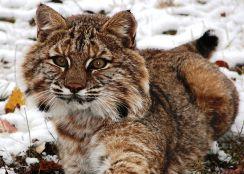
New York State has also released a management plan for bobcats. The plan includes a survey of the state’s current bobcat population. Comments on the plan are being accepted until February 16.
Read an article about the plan in North Country News, here.
Here’s the state’s bobcat page, with a link to the management plan.

In California, the Department of Fish and Game is looking for volunteers over 16 years old and in good health to help count bighorn sheep in the San Gabriel Mountains on March 4. There is an orientation on March 3.
Read an article from KPPC, southern California public radio, here.
Go to a website dedicated to the count, here.

Also in California, the US Fish and Wildlife Service will review the status of the San Bernardino flying squirrel. It’s soliciting information about the flying squirrel and its habitat from state and federal natural resource agencies until April 2.
Read the article in the Riverside Press-Enterprise
The US Fish and Wildlife service press release is here.

Bobcat photo courtesy of the New York State Department of Environmental Conservation.

Rare Birds: Dry or Oily?

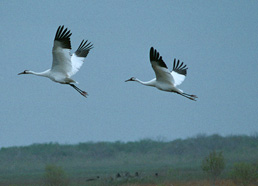
During Texas’s last drought, 23 whooping cranes died while wintering in the Aransas National Wildlife Refuge, says an Associated Press story in the Tampa Bay Times. With another drought this year, wildlife managers can only watch and wait to see what happens.

The total population of wild whooping cranes is about 400. The only self-sustaining wild population is the one that migrates between Aransas in Texas and Wood Buffalo National Park in Canada.

Read the story in the Tampa Bay Times, here.

In Colorado, St. Vrain State Park sits in the middle of a productive oil field. The state is short on funds. Oil companies are eager to expand into the park, which is home to bald eagles, American white pelicans and the state’s largest blue heron rookery.

Read about the conundrum in the Denver Post: This news story lays out the facts. This columnist explains the dilemma.

What’s a state to do? In Colorado, they said yes to limited drilling on 1/12. Read about the decision in the Denver Business Journal.

Photo: Whooping cranes in Aransas NWR, by Steve Hillebrand, courtesy US Fish and Wildlife Service

Bobwhite Report

Last fall, the National Bobwhite Conservation Initiative, self-admittedly “a late entry in the long-running national drama” of bobwhite quail conservation,” published a 46-page report on the State of the Bobwhite. The report provides a valuable summary of population data, research and contacts for the 25 states participating in the initiative.

The report concludes that despite conservation efforts, bobwhite populations are still declining, all though they are not declining as steeply as they have in the past. A blog post on the report in the Charlotte Observer notes that all species dependent on the same grassland habitat are in decline.

What are other states doing that your state isn’t? Which states have notable bobwhite programs?

Read the Charlotte Observer’s blog post on the report, here.

Read the report itself, here.

Wyoming Wins Praise on Sage Grouse Management

It’s pretty rare to see a newspaper editorial praising a state wildlife plan, so we wanted to make sure that you saw this one, in the Casper Star-Tribune earlier this week.

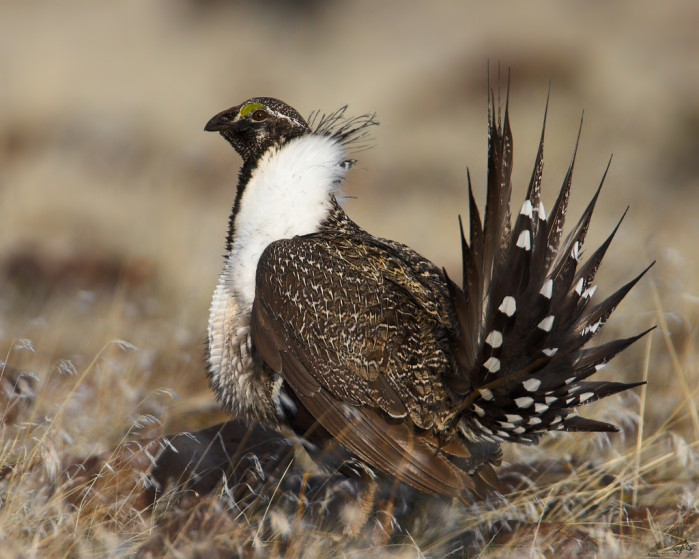
The editorial notes that the feds are pleased too, quoting Secretary of the Interior Ken Salazar at the sage grouse summit in Cheyenne last week: “We see Wyoming as a template for how we address the challenges the sage grouse is facing.”

It also notes that pleasing the feds has some benefits. Wyoming has received $17 million in federal funding (through the US Dept. of Agriculture) to conserve critical sage grouse habitat.

Read the entire editorial in the Casper Star-Tribune, here.

See State Wildlife Research News’ previous coverage of Wyoming’s sage grouse management plan, here. It includes a link to more detail about the plan itself.

Photo: Greater sage grouse by Stephen Ting. Courtesy US Fish and Wildlife Service.

Hawaiian Fence Even Keeps Out Mice

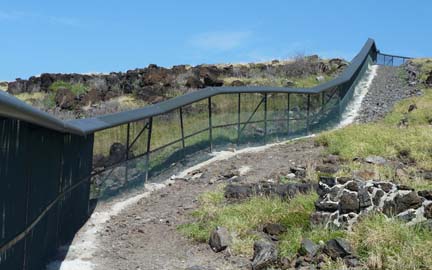
When invasive species are harming the nests of ground-nesting birds, an obvious solution is to erect an exclosure. Sometimes that solution works, and sometimes it doesn’t. So just imagine the situation in Hawaii, where non-native rats and even non-native mice are part of the problem. It’s hard to keep those tiny critters out.

The American Bird Conservancy (ABC) announced recently that a 2,040-foot long, 6.5-foot-high, stainless steel fence surrounding a 59-acre wedge-tailed shearwater nesting area on O’ahu is a success. This year’s chick count is up 14 percent, and is the highest number ever recorded at the colony. The fence has been up for eight months.

Read the ABC press release for the details. Also see the press release announcing the project, which has some interesting additional information, including that the project has spirit gate in an accommodation to local belief.

This is the first time such a fence has been used in the United States, but it was developed in New Zealand, which has a similar problem with ground-nesting birds and non-native predators that range from house cats (high jumpers) to mice (can squeeze in just about anywhere).

Check out this link for more information on the New Zealand-style exclosure fencing. It may be expensive, but it seems to be effective.

You may not have Hawaiian-caliber nesting bird issues, but even adopting some aspects of this fence can offer solutions to tough exclosure problems.

Photo by George E. Wallace, ABC, used by permission.
Tuppence a Bag

I can’t answer the question of whether feeding the birds is a harmless way to get people to care about wildlife or a if its a tragedy. But of all the harm that feeding birds does or might do, it looks like we can cross pesticide exposure off the list.

The American Bird Conservancy had a lab test bird seed from various sources and found either no pesticide contamination, or levels below those believed to harm bird health.

Read the press release announcing the study here.

The nice thing about this study is that it included seed from WalMart, Home Depot, Lowes and Target, places where the average bird feeder might purchase seed.

The actual report does not appear to be available. I’ll keep looking and post when and if I find it.

In for a “Snowy” Winter?

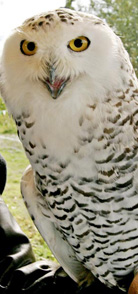
They’re big, they’re beautiful and if you live in the northern part of the United States, they may be in your neighborhood now. Reports from eBird suggest that this is an irruption year for snowy owls. Not often seen in the Lower 48, snowies are being reported in the northeastern U.S., particularly along the Great Lakes at the Atlantic coast.

While bird watchers are sure to be thrilled, but the addition of this unusual species to your state’s usual winter birds does add a bit of a management problem. Well meaning (and not so well meaning) people can easily cause harm to these birds, which are stressed out by being away from their home range.

The birds also attract media coverage when they are spotted. Here’s just a sampling:
The Gothamist (blog) reports a snowy near the Verazzano Narrows bridge in NYC.
More than 100 snowies in Wisconsin
Spokane Spokesman-Review (birding blog)
Minneapolis Star-Tribune (birding blog)

Read the eBird blog for more details, including the latest thinking on why these tundra birds sometimes pay us a visit, and for a fabulous map populated by eBird data.

Photo: Captive/rehabilitated snowy owl in Alaska. Photo by Ronald Laubenstein, courtesy of US Fish and Wildlife Service

SeaBC: Counting Sea Birds

The Audubon Christmas Bird Count has been going on for over 100 years. During the CBC, participants drive, hike, climb and even wade to get to the best birding sites to add to their totals. But they never leave land.

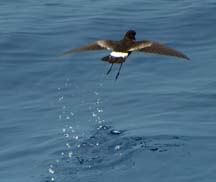
This year, the “SeaBC” Sea Bird Count (not affiliated with Audubon) plans to fix that. Avid birders and boaters will take to their watercraft during the month of December, tally the species they see, and enter their data on eBird, the citizen science bird database run by Audubon and the Cornell Laboratory of Ornithology. If it catches on, it could add a valuable new source of citizen science data on sea-faring birds.

The program is organized by Diana Doyle, author of Managing the Waterway, a cruising guide and electronic charting series. She already rallies the troops at Birding Aboard, a Facebook page dedicated to bird watching during long-distance voyages.


Learn more about the SeaBC at Birding Aboard, or jump straight to the SeaBC resources page where you can download a tally sheet.

Read more about the project on the Vermont Center for Ecostudies blog. (Keep scrolling down. It’s in the middle of a bunch of birding news.)

Photos: Wilson’s Storm-petrel. Photo by Diana Doyle. 
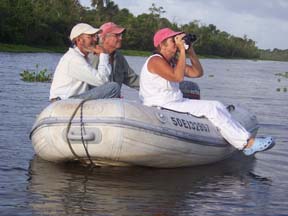
Some cruisers taking the dinghy for some birding in Venezuela. Photo by Devi Sharp
Both photos courtesy of SeaBC and Birding Aboard.

“Profound Setback” in Whooping Crane Recovery

A pair of teenagers shot two of the 10 whooping cranes released in Louisiana, hampering an attempt to establish a third population of the endangered bird, says an article in the Montreal Gazette.

The article gives the details of the whooping crane recovery program, which spans the United States and Canada, with an emphasis on Canadian contributions. It includes the fact that there were just 22 whooping cranes in 1941. The population has now rebounded to about 400 of the cranes in the wild.

The article says that state wildlife officials had created an education campaign before this fall’s goose and duck hunting season in an attempt to prevent hunters accidentally shooting the whooping cranes. The article doesn’t mention what the teenagers’ motives were.

Read the article in the Gazette here. 

Whopping cranes had a happier visit to Missouri last week. A hunter, believing he heard someone in distress, investigated and found instead a pair of migrating whooping cranes. The cranes stayed in the agricultural field long enough for a Missouri Department of Conservation (MDC) staffer to arrive on the scene and confirm the sighting. Local bird-watchers were able to get a glimpse of the radio-tagged adult-and-juvenile pair too.

Read the MDC press release here.

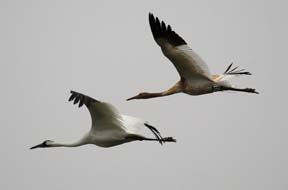
Photo: Whooping cranes. Courtesy Missouri Department of Conservation