
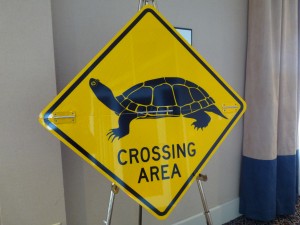
 Black racer snakes are rare in Vermont, so when highway construction was going to introduce drains with holes big enough for the snakes to fall into, the Vermont Department of Fish and Wildlife asked for a fix. Drain covers with smaller holes were not possible. So the Vermont Agency of Transportation fashioned snake-sized ladders and attached them to the drains. It turns out that black racers are excellent climbers, so it is expected that the snakes will rescue themselves if they fall into the drain. A poster on the unusual solution was presented at the Northeastern Transportation and Wildlife Conference, being held this week (Sept. 21 – 24) in Burlington, Vermont.
In other news from the conference: Now that fish and wildlife departments and transportation agencies are getting along so well together, what is the next step? Bringing urban and land-use planning into the fold. This will be trickier, because while transportation and wildlife function on the state level, planning happens at the local level. In Vermont, several speakers noted, just two percent of all development was subject to state review. (And Vermont has a strong state-level development law.)
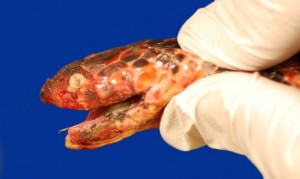 Snake Fungal Disease was identified in a mud snake found on the edge of a blackwater swamp near near Statesboro, Georgia, according to
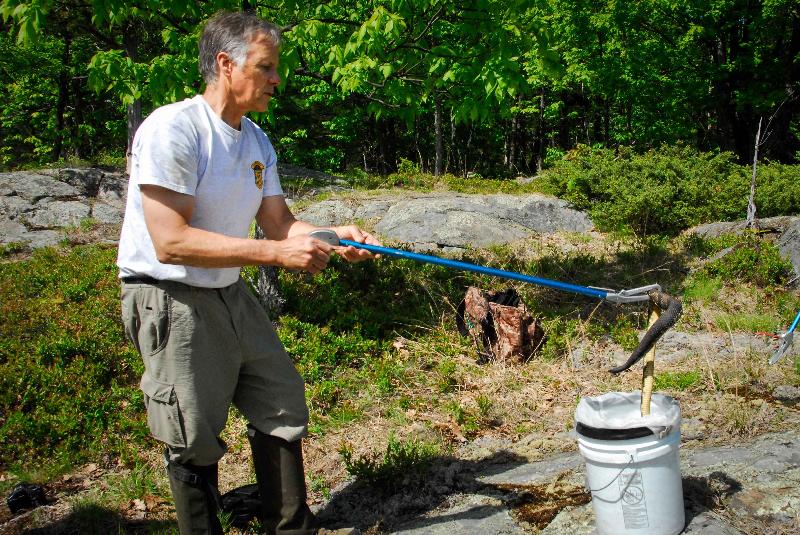
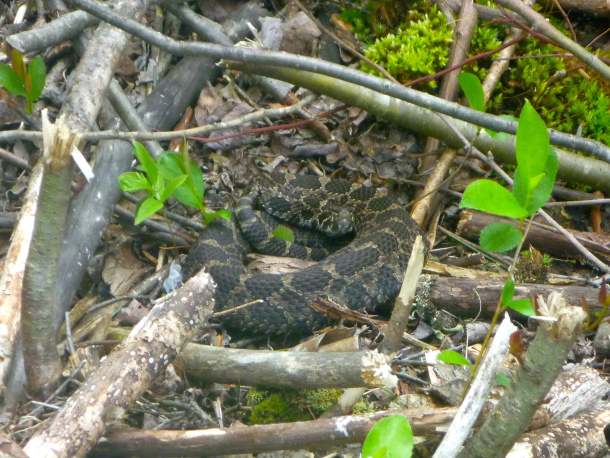 Three years of research, more than $60,000 in funding, and continual habitat manipulation is the secret to resurrecting a degraded swamp in New York into basking habitat for one of the state’s slithering residents.
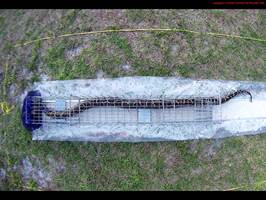 It’s got to be a really big snake to trip the trap recently patented by the US Department of Agriculture’s National Wildlife Research Center (NWRC). But that’s the point. The idea is to live trap invasive pythons in Florida while leaving the native snakes alone. One difference between the native snakes and the non-native pythons is that the pythons tend to be a lot bigger.
 Nashville Public Radio
 Non-native Burmese pythons are disrupting the south Florida ecosystem by devouring native wildlife.
 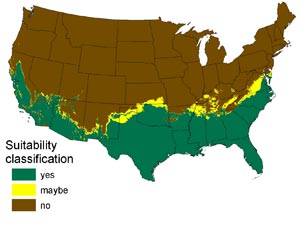 In 2008 the US Geological Survey published a report that said that the entire southern third of the United States could provide habitat for the invasive Burmese python that has been roiling the Florida Everglades ecoystem.