
 There have been studies that have calculated the likelihood of extinction for various amphibian species, but the first study to calculate how fast amphibian populations are declining was recently published in PLoS ONE.
The study found that amphibians disappeared from their habitats at a rate of 3.7% per year from 2002 to 2011. Species that are red-listed by the International Union for Conservation of Nature (IUCN) disappeared at an average of 11.6% annually.
“Even though these declines seem small on the surface, they are not,” said US Geological Survey ecologist Michael Adams, the lead author of the study in a press release. “Small numbers build up to dramatic declines with time. We knew there was a big problem with amphibians, but these numbers are both surprising and of significant concern.”
Read the PLoS ONE article, here. (Open access.)
Read the USGS press release on the paper, here.
Read a Washington Post article that is mostly about the rate of amphibian decline, here.
Photo: A green tree frog (Hyla cinerea) sits on the lip of a pitcher plant in a bog in Alabama. Photo by Alan Cressler, used courtesy USGS.
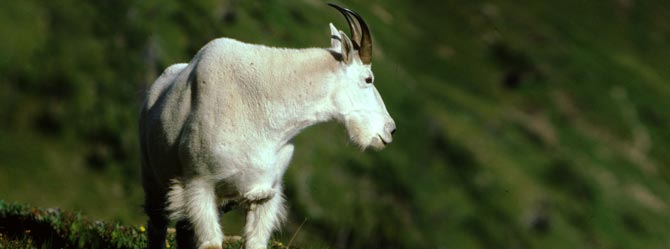 The Wyoming Game and Fish Department recently captured four mountain goats in the western part of the state as part of an on-going study into the animals’ travel between Idaho and Wyoming, says an Associate Press article in the Billings Gazette.
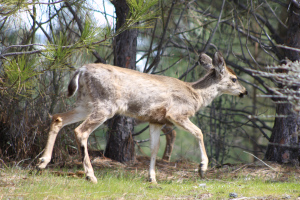 California Department of Fish and Wildlife (CDFW) researchers have captured and collected hair and blood samples from more than 600 deer and elk in an effort to understand “deer hair-loss syndrome,” says
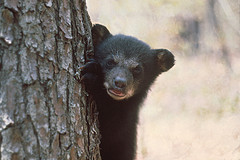 About 200 people watched as the Oklahoma Department of Wildlife Conservation released a young black bear. The bear had been found and tranquilized in a university campus neighborhood and was released in a wildlife area, reported
 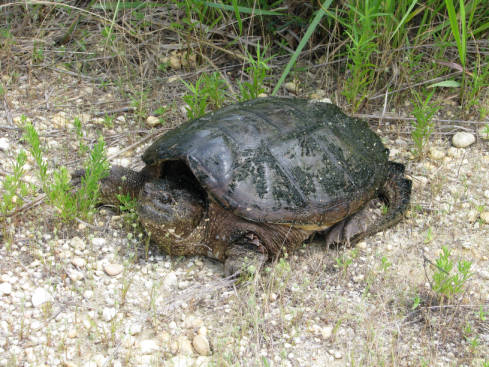 All over the Internet, on