
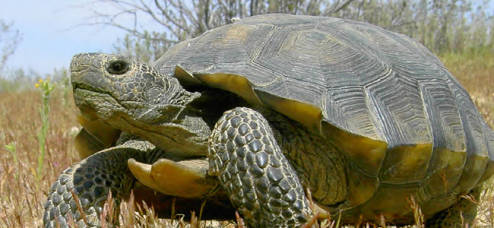
 For decades, captive tortoises have suffered from a mysterious ailment known as “upper respiratory tract disease.” The disease was known in captive tortoises in Europe and the United States, according to information from the California Turtle and Tortoise Club.
Then, in the 1980s wild desert tortoises in California suffered a major die-off from the disease.
The threat of spreading that disease to wild tortoise populations in Arizona is one of the many reasons why the Arizona Game and Fish Department does not allow the release into the wild of tortoises that have been handled for any length of time. The department cares for as many of the tortoises as it can, and also runs an adopt-a-tortoise program.
Last year the department cared for over 40 tortoises at one time.
“I can’t stress enough how detrimental it could be for both the captive and wild tortoises to release a captive tortoise in the wild,” Zen Mocarski, a department public information officer said in an AZGFD newsletter. “Along with potential disease issues and displacement, captive tortoises are not prepared to find food and water in an unfamiliar area and often die.”
Read the AZGFD newsletter item, here. (It is the third story from the bottom.)
Read the California Turtle and Tortoise Club’s upper respiratory tract disease fact sheet, here.
Photo: This desert tortoise is in Nevada. Courtesy US Fish and Wildlife Service.
 The deer breeding and captive hunt industry would like state departments of agriculture to regulate their industry, rather than state fish and wildlife departments. The industry has made a legislative push throughout the country for more favorable regulations.
 “The most feasible action that would benefit black-footed ferret recovery is to improve prairie dog conservation,” said Pete Gober, black-footed ferret recovery coordinator for the
  The news is not that
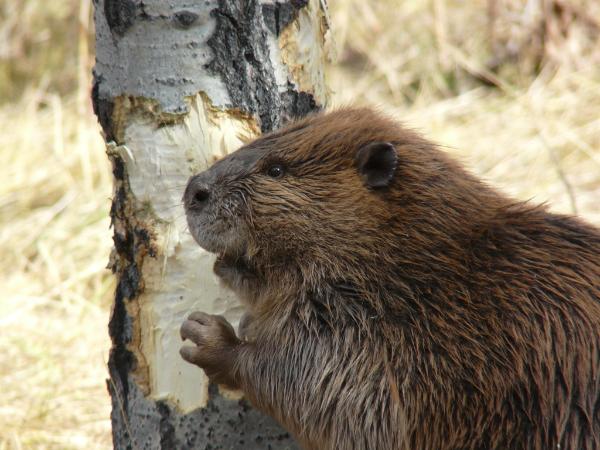 When wolves were restored to Yellowstone National Park, its riparian habitats bounced back. But it takes more than wolves killing elk to restore these habitats, a recent paper in the
 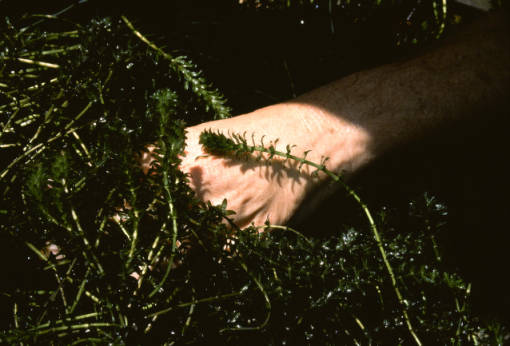 Clarks Hill Lake in Georgia was home to seven bald eagle nesting territories a few years ago. Today, only one nesting territory on Clarks Hill remains. The culprit is Avian Vacuolar Myelinopathy, or AVM, a mysterious syndrome that has killed thousands of coots and dozens of bald eagles in the southeastern United States, says
 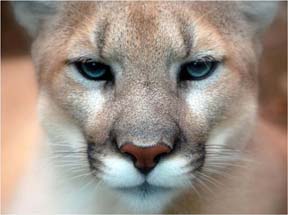 When it comes to mountain lions making use of suburban habitats, there is no difference between males and females, or resident and transient animals, but sub-adult mountain lions were more likely to be found in the suburbs, a study published in
 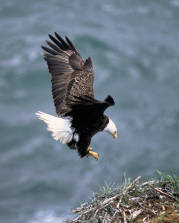 Bald eagle numbers are up in Georgia and Massachusetts, and a Wisconsin county has seen its first bald eagle nest in over 100 years.