More Details on Protecting Burrowing Owls

Back in 1995, the California Department of Fish and Game released a report on burrowing owls that described how to survey for them and steps that could be taken to mitigate loss of habitat. Yet, the numbers of burrowing owls in California have continued to decline.
A new, 36-page report goes into more detail and incorporates research that has been done since the 1995 report. It includes suggested survey protocols, and buffers for various times of the year.

Read the California Fish and Game press release here.
Find the report itself (a PDF), here.

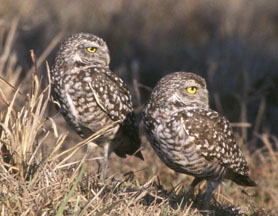
Photo by Lee Karney, courtesy US Fish and Wildlife Service

Sage Grouse on the Brink

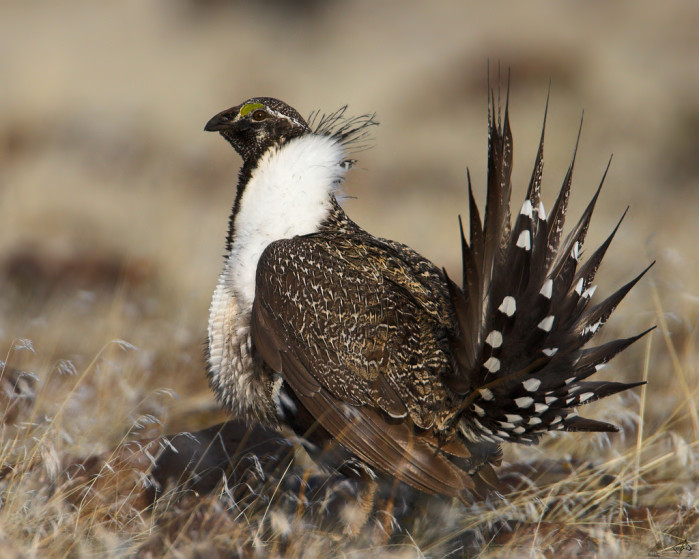
A recent study of sage grouse in northeastern Wyoming says that the population there is just one severe weather event or West Nile outbreak away from extirpation. The study was conducted by three University of Montana wildlife biologists on behalf of the US Bureau of Land Management (BLM).
Read the report, a 46-page PDF, here.
Here’s the BLM web page with links to other info about the report
And here’s the story in the Casper Star-Tribune.

Despite the dire forecast, the Wyoming Game and Fish Commission will not close the three-day hunting season in northeastern Wyoming. The reasoning, says a Field & Stream blog post, is that because it is primarily energy development and disease, not hunting, that is causing the birds’ decline, hunters should not be penalized.

The blog post leans heavily on another article from the Casper Star-Tribune. Read that one here. That article notes that state biologists proposed closing the hunting season, but were over-ruled when dozens of people attended the Game and Fish Commission meeting to protest the closing. The article does not note the irony of the citizens who disagreed with the over-ruled scientists saying that the scientists’ recommendation was based on politics.

More troubling than even the possible extirpation of this population, or the politics behind the species’ management, is the fact that the Wyoming sage grouse management plan is the model for the nation. We’ve written about Wyoming’s plan being the national model before:
When a newspaper editorial praised the Wyoming sage grouse management plan;
And when the BLM took the lead on coordinating sage grouse management efforts across its range.

Photo: Greater sage grouse by Stephen Ting. Courtesy US Fish and Wildlife Service.

Swift Decline: Chimneys or Beetles?

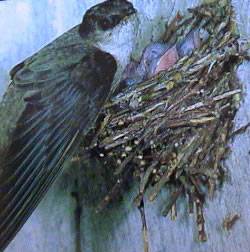
chimney swiftChimney swifts decline 95 percent in Canada between 1968 and 2005. After studying a six-foot deep pile of swift guano in a now-capped chimney on the campus of Queen’s University in Kingston, Ontario, researchers believe that DDTs impact on the beetle population played an important role in the swifts’ decline.

Studying the hard remains of insects in the pile, they found that the birds switched from a diet rich in beetles to one where true bugs (which include cicadas and stink bugs) were dominant.The researchers believe the switch from the energy-rich beetles to the less caloric true bugs was the worst kind of crash diet.

Read the news brief in ScienceNow.
Read the paper in Proceedings of the Royal Society B. (Open access.)

Photo courtesy of the National Park Service

When the Weather is for the Birds

Black vulture range lags behind climate change

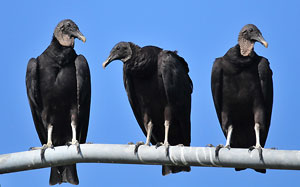
The Black Vulture has expanded its range northward and now occurs in parts of Massachusetts where the minimum winter temperature is similar to that in Baltimore, Maryland in 1975. Photo by Liz Malyszek

Citizen scientists noticed the impact of a mild winter in the United States and Canada this year, reflected in the species composition of the birds tallied during the Great Backyard Bird Count, reports an article in ScienceNow, the online news service of the American Association for the Advancement of Science (AAAS). You can also read the press release from the Cornell Lab of Ornithology.

However, birds are not responding quite so quickly to overall climate trends, says a paper in the Journal of Animal Ecology (fee or subscription required to view entire article). It’s more work from the Cornell Lab of O, but this time the press release is from Cornell University.

Happy Bird Day to You

No, today is not your Bird Day. International Migratory Bird Day is typically on the second Saturday in May, with adjustments encouraged to make sure birds are migrating through your area on the day you celebrate. (It’s the second Saturday in October, south of the equator.)

This year, the second Saturday is May 12, but the Wisconsin Department of Natural Resources, for example, will be celebrating on May 5.

The day is organized by Environment for the Americas, and it was founded by Smithsonian Migratory Bird Center and the Cornell Laboratory of Ornithology. The Bird Day website as event ideas, sample press releases and more.

It’s as good an excuse as any to shine the spotlight on your department’s migratory bird research.

March Roundup of New Research

Spring is here and a bunch of wildlife surveys are underway around the country.
In Delaware:
-It’s the fifth and final year of the Delaware Breeding Bird Atlas.
-A special effort is being made in 2012 to tally owls as part of the atlas.
Horseshoe crabs are being tallied again, and volunteers are being trained.
-The annual osprey count is offering a volunteer training for the first time since 2007.

Maryland is two years in to four years of surveys for an amphibian and reptile atlas and is looking for volunteers.

In Kansas, they are searching for lesser prairie chicken breeding areas, or leks, from the air with helicopters. Field crews will train on March 29-31 and conduct official survey work across all of western Kansas until the middle of May. The Kansas Department of Wildlife, Parks and Tourism is also asking people to report leks. The survey is part of a five-state effort, and the survey technique will be evaluated.

In North Dakota, the Game and Fish Department has launched a two-year study of white-tailed deer in intensely farmed agricultural areas.

In Maine, biologists at the Department of Inland Fisheries and Wildlife have visited up to 100 dens each winter for 37 years, making the survey in the nation’s oldest radio-collar monitoring program for bears. This year the Maine Sunday Telegram wrote a story about it, with lots of pics. Read it here.

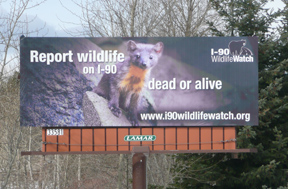
And in Washington, commuters have been reporting wildlife sightings for over a year on the I-90 corridor in anticipation of road improvements. The project’s first annual report was released recently, generating articles in the Everett Herald  and The Seattle Times, and coverage other media.

Photo of I-90 Wildlife Watch billboard by Paula MacKay/Western Transportation Institute, used by permission.

March Wildlife Disease Roundup

Things have actually been pretty quiet over the past month when it comes to wildlife diseases. The big news, of course, is white nose syndrome in Alabama, but there have been a few other stories worth noting.

Rabbits can get prion diseases. Once it looked like they were immune to diseases in the family of mad cow and chronic wasting disease, but the latest research shows they can get it. (See the original paper in the Proceedings of the National Academy of Sciences.)

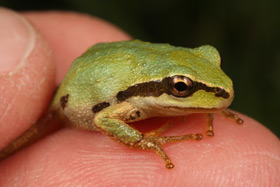
At least one frog species, the Pacific chorus frog, is a carrier of chytrid fungus, a recent study found. Read the LiveScience story via MSNBC. The study was published recently in PLoS ONE, read it here. Or read the San Francisco State University press release, here.

A wolf suffering from parvovirus was discovered in Idaho. Parovirus effects all canids, including domestic dogs. There is a vaccine for the disease available for dogs. Read the Idaho Department of Fish and Game press release here.

Also, there has been an outbreak of canine distemper in gray foxes in Michigan.

For birds:
The red tides on the Gulf coast of Texas have caused the deaths of redhead ducks.
The death of eider ducks on Cape Cod (Massachusetts) has been pinned on a virus, named Wellfleet Bay virus.
Ten wild turkeys were found dead from avian pox, a virus, in southeast Montana.

Finally, back in late February, brucellosis, a cattle disease, was found in elk in Montana.

Photo: A Pacific chorus frog. Credit: Joyce Gross

For Better Genetics, Use Habitat Clusters

by Louise HuntHabitat clusters can improve the genetics of rare species, such as the Florida scrub jay, says a recent paper in Biology Letters.

The research focused on the genetics and available habitat for the Florida scrub jay, but the findings are applicable to other rare species, the paper says.

“We present a detailed case study of one highly fragmented, endangered species (Florida Scrub-Jay) showing the importance of keeping habitat gaps as narrow as possible, in order to maintain gene flow among populations,” says John Fitzpatrick, director of Cornell Lab of Ornithology and one of the authors of the paper. “Habitat gaps greater than a few kilometers separating two populations reduce movement of jays across them sufficiently to cause genetic isolation of the two populations. This highlights the importance of maintaining or restoring habitat ‘stepping stones.'”

Read the paper here — with subscription or fee.
Read the Cornell Lab of Ornithology press release here.
Read the Cornell Lab of Ornithology blog on the topic here.
Read the Volusia County (Florida) web page about the research, while it was in progress, here.

Photo: Florida scrub jay by Louise Hunt, courtesy of the Cornell Lab of Ornithology

Earthworms Cause Ovenbird Decline

A recent paper in Landscape Ecology confirms that ovenbirds are found in lower densities in sugar maple and basswood forests in Wisconsin where invasive earthworms are found.

Ovenbird numbers have been in decline for decades in the Northeast and Midwest. Habitat loss is typically named as the chief culprit, although non-native earthworms were known to be a contributing factor.

Ovenbirds are a ground-nesting, forest-interior species. They rely both on large tracts of forested land and plenty of leaf-litter from which to build their beehive-oven-shaped nests. Earthworms, which are not native to the northern parts of the United States, quickly chew up fallen leaves and other forest debris, leaving the ovenbirds with few places to hide and little to build with.

Read the paper in Landscape Ecology, here. (Fee or subscription required.)
Read the Smithsonian Institution blog post on the findings, here.

The Smithsonian information has been reprinted widely around the web. A quick survey showed only verbatim copies of the blog post, but the coverage does appear to be widespread.

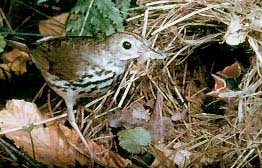
Photo: Ovenbird, courtesy of the Wisconsin Department of Natural Resources

Climate Vulnerability of Taxa at the State Level

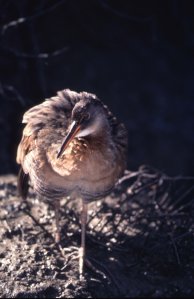
Clapper rail, California Fish and GameUsually it is hard enough figuring out what’s stressing species right now to figure out which may need protection. Predicting the future — such as how land uses might change — adds another level of complexity. Figuring out the impact of climate change, with its assortment of predictive models, is more complex still.

A team from PRBO Conservation Science, a non-profit bird ecology research organization, took on the challenge of predicting the vulnerability of California’s bird species to climate change at the behest of the California Department of Fish and Game. The results were released by the science journal PLoS ONE last week.

Instead of applying existing, national models of species vulnerability, the research team developed their own framework. They were able to do this because of the abundance of data unique to California, the paper says.

“What’s most exciting about the study is that our unique approach is one that other scientists and resource managers can duplicate to help them conserve wildlife in the face of climate change,” said Tom Gardali, an ecologist with PRBO Conservation Science and the paper’s lead author, in a press release issued jointly by PRBO and the California Department of Fish and Game.

Read the PLoS ONE paper here. (Open access.)
Read the California Fish and Game release here. (It includes a link to a complete list of vulnerability ratings, by taxa.)

What do the paper’s findings mean on the ground, for California’s birds? Wetland taxa are the most vulnerable, notes a KQED climate blog, and many of the birds found to be vulnerable are found in San Francisco Bay.

The KQED Climate Watch blog says:

“That’s primarily because of sea level rise and also because there are already so many imperiled species that use that habitat in the bay,” says Tom Gardali…

Photo: The clapper rail is one of the at-risk birds identified by the climate change study. Photo courtesy California Fish and Game